
Cannabis Nutrient Chart
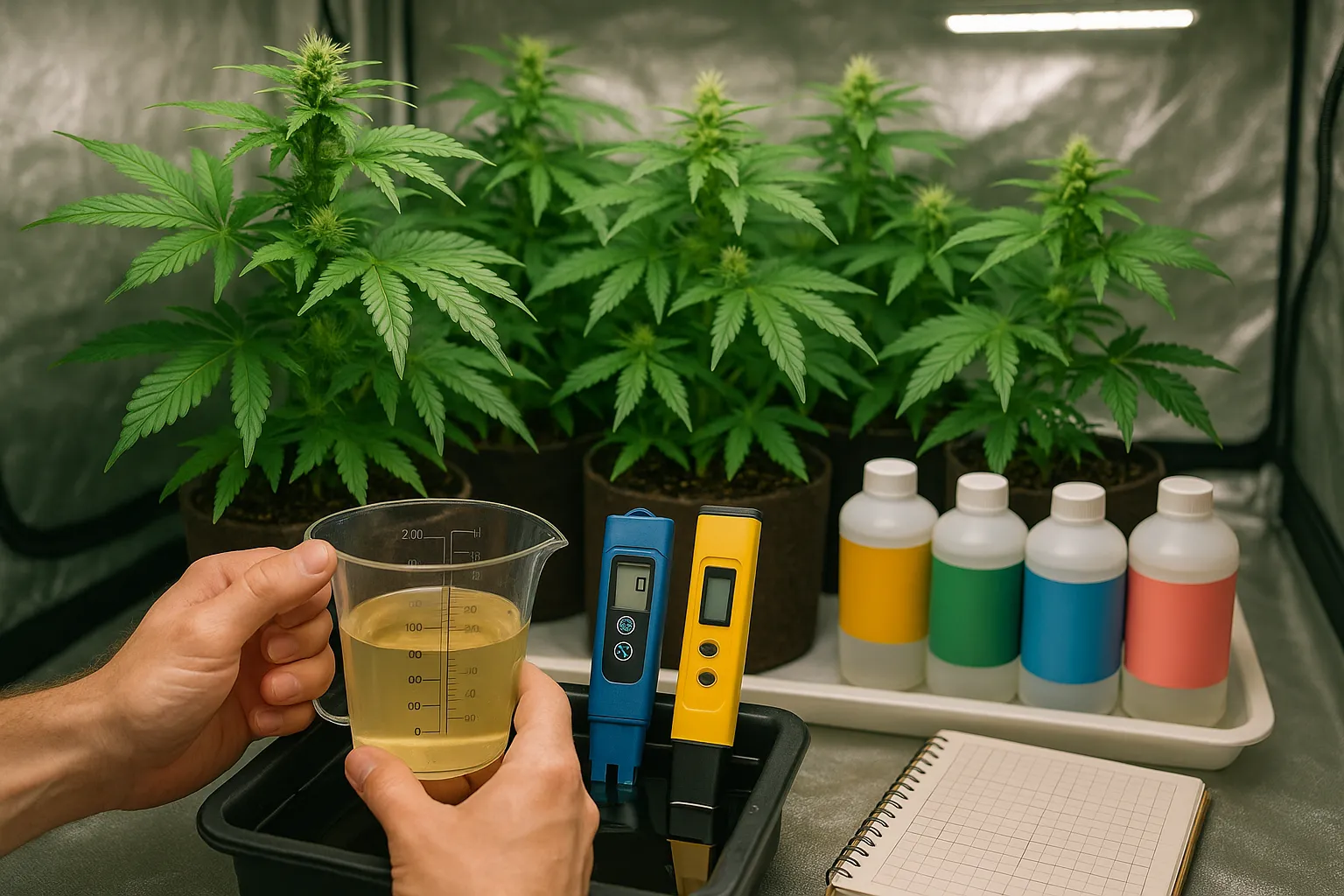
A clear and accurate cannabis nutrient chart is one of the most useful tools for growers who want healthy plants and consistent yields. Whether you grow in soil, coco, or hydroponics, understanding how nutrients change from seedling to harvest helps you avoid deficiencies, lockout, and burnt tips.
What Is a Cannabis Nutrient Chart and Why It Matters
A cannabis nutrient chart is a visual or tabular guide showing how much of each essential nutrient your plants need at each growth stage. It usually includes:
- Macronutrients: Nitrogen (N), Phosphorus (P), Potassium (K)
- Secondary nutrients: Calcium (Ca), Magnesium (Mg), Sulfur (S)
- Micronutrients: Iron, Manganese, Zinc, Copper, Boron, Molybdenum
- Target EC/PPM and pH ranges
Using a chart helps you feed consistently, avoid guesswork, and adapt your nutrient schedule to your specific medium and lighting.
Core Stages in a Cannabis Nutrient Chart
Most feeding schedules divide the life cycle into four main phases. Below is a practical overview you can adapt to your own nutrient line.
1. Seedling Stage (Week 1 to 2)
Young seedlings are sensitive and require minimal feeding.
- NPK focus: Very mild, low nitrogen
- Typical EC: 0.2 to 0.4 (100 to 250 ppm, including tap water)
- pH range:
- Soil: 6.0 to 6.5
- Hydro/coco: 5.5 to 5.9
- Use root stimulators or beneficial microbes rather than strong base nutrients
Overfeeding at this stage is one of the most common beginner mistakes. When in doubt, feed less and observe.
2. Vegetative Stage (Week 3 to 6+)
During veg, your plants build stems, branches, and foliage. The cannabis nutrient chart will shift toward higher nitrogen.
- NPK focus: Higher N, moderate P and K
- Typical EC: 0.8 to 1.4 (400 to 700 ppm)
- pH range:
- Soil: 6.2 to 6.6
- Hydro/coco: 5.7 to 6.0
- Add calcium and magnesium (Cal-Mag) if using RO water or coco
Look for lush green leaves and vigorous growth. Pale new growth can signal nitrogen or iron shortages, while very dark, clawed leaves may indicate too much nitrogen.
3. Early Flowering (Transition Weeks 1 to 3)
As plants switch to bloom, their nutrient balance changes.
- NPK focus: Reduced N, increased P and K
- Typical EC: 1.2 to 1.6 (600 to 800 ppm)
- pH range:
- Soil: 6.3 to 6.7
- Hydro/coco: 5.8 to 6.1
- Introduce bloom nutrients gradually over 7 to 10 days
Too much nitrogen in early flower can delay bud development and produce leafy, airy flowers.
4. Peak Flowering and Ripening (Weeks 4 to 8+)
In mid to late flower, the cannabis nutrient chart prioritizes phosphorus and potassium for dense buds and resin production.
- NPK focus: Low N, high P and K
- Typical EC: 1.4 to 1.8 (700 to 900 ppm), then taper down in final weeks
- pH range:
- Soil: 6.3 to 6.8
- Hydro/coco: 5.9 to 6.2
- Optional: PK boosters in mid flower, used sparingly
In the last 7 to 14 days, many growers reduce EC and feed only water or a very light solution to help the plant use stored nutrients.
How to Use a Cannabis Nutrient Chart Effectively
A chart is a guideline, not a rigid rule. To get the best results:
- Start at 50 to 75 percent of the bottle recommendation and increase only if plants look hungry
- Monitor runoff EC/PPM to see whether salts are building up in the medium
- Check pH regularly; many deficiencies are actually pH-related nutrient lockout
- Adjust for strain and environment; heavy feeders and high-intensity lights often need more nutrition
- Flush or leach periodically in soilless or hydro systems to prevent salt accumulation
Common Nutrient Problems and What the Chart Can Tell You
Recognizing patterns helps you correct issues quickly.
- Nutrient burn: Brown, crispy leaf tips and very dark foliage. Reduce EC, flush with pH-balanced water, and resume feeding lighter.
- Deficiencies:
- Nitrogen: Lower leaves yellow and drop in veg
- Phosphorus: Dark, dull leaves, slow growth, possible purple stems
- Potassium: Yellow or brown leaf edges, weak stems
- Cal-Mag issues: Rust spots, interveinal yellowing, or weak stems, especially in coco or under strong LED lighting.
When symptoms appear, compare the stage of growth and your current EC and pH to your cannabis nutrient chart. Often, a small adjustment restores balance.
Building Your Own Cannabis Nutrient Chart
Most nutrient brands provide feeding schedules, but creating a custom chart helps you dial in your specific setup.
- Note medium, light intensity, and strain for each grow
- Record weekly:
- EC/PPM and pH of feed and runoff
- Visual observations (color, vigor, leaf tips)
- Any additives used (Cal-Mag, enzymes, boosters)
- After harvest, refine your chart:
- Reduce EC where burn occurred
- Increase slightly where plants appeared pale or hungry
Conclusion
A well designed cannabis nutrient chart turns feeding from guesswork into a repeatable process. By matching nutrient strength, pH, and NPK balance to each growth stage, you support healthy roots, strong vegetative growth, and dense, aromatic flowers. Observe your plants closely, adjust the chart to your environment and genetics, and refine it each cycle to steadily improve quality and yield.