
Cannabis Watering Schedule
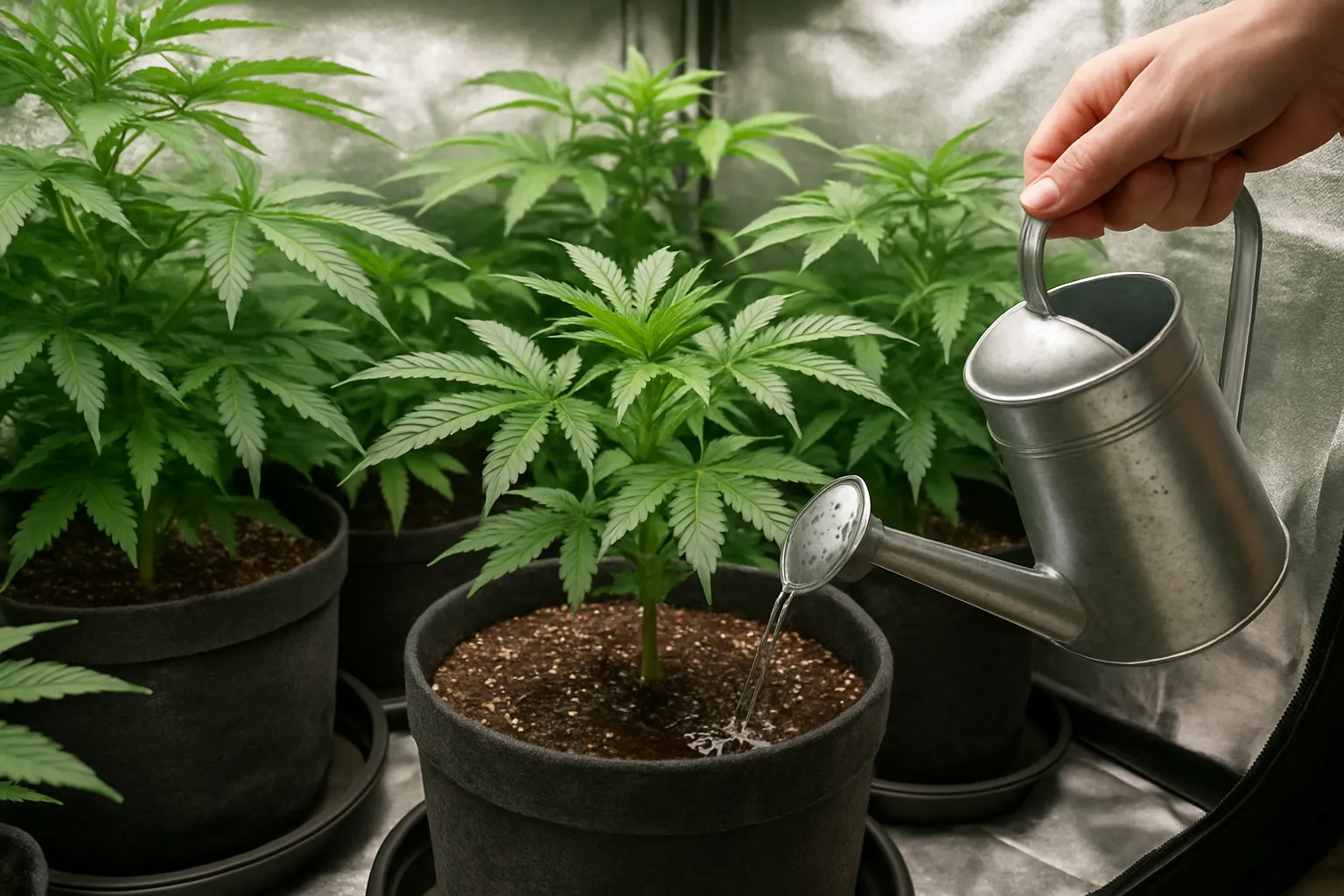
A well planned cannabis watering schedule is one of the most important factors in growing healthy, vigorous plants. Water too often and you risk root rot and nutrient lockout. Water too little and plants become stressed, stunted, and vulnerable to pests and disease. This guide explains how to build a reliable watering routine from seedling to harvest, in soil or coco, whether you grow indoors or outdoors.
Understanding Your Cannabis Watering Schedule
There is no single calendar that fits every grow. A cannabis watering schedule depends on:
- Growing medium (soil, coco, soilless mix)
- Container size and type (plastic, fabric pots, air pots)
- Plant size and stage (seedling, veg, flower)
- Environment (temperature, humidity, airflow, light intensity)
Instead of watering on fixed days, successful growers combine a rough schedule with plant signals and medium moisture checks. Think of it as a flexible framework rather than a rigid timetable.
Watering by Growth Stage
Seedlings (Weeks 1 to 3)
Young plants have small, delicate root systems and need frequent but very light watering.
- Use a spray bottle or small cup to moisten only the top 2 to 3 cm of medium.
- Water every 1 to 3 days, depending on how fast the surface dries.
- Keep the medium damp, not soaked. Avoid runoff at this stage.
- Use mild nutrient solutions or plain, pH balanced water as appropriate for your medium.
Vegetative Stage
As roots expand and foliage grows, plants use more water and nutrients.
- Typical frequency: every 2 to 4 days in soil, every 1 to 2 days in coco.
- Water until 10 to 20 percent runoff appears from the bottom of the pot.
- Allow the top 3 to 5 cm of the medium to dry before watering again.
- Use the weight of the pot as a guide: light pot means time to water.
Flowering Stage
During early and mid flower, cannabis can drink heavily, then slow down slightly near harvest.
- Early to mid flower: similar or slightly higher frequency than late veg.
- Late flower: plants often drink less; check carefully before watering.
- Avoid letting plants wilt, as stress at this stage can reduce yield and quality.
- In the final flush (if you flush), you may water more often with plain water, but still follow dryback cues.
Cannabis Watering Schedule for Soil vs Coco
Soil Grows
Soil acts as a buffer, holding nutrients and moisture longer.
- Water when the top few centimeters are dry and the pot feels noticeably lighter.
- A common pattern is every 2 to 4 days, but this varies with pot size and environment.
- Use a full wet to dry cycle: water thoroughly, then let excess moisture leave the root zone.
- Overwatering in soil is usually from watering too often, not from giving too much in a single event.
Coco and Soilless Mixes
Coco coir and similar media hold lots of air and drain quickly, so they are watered more frequently.
- Typical frequency is once or twice daily in small pots under strong light.
- Do not let coco fully dry; aim for consistently moist but well aerated.
- Feed with nutrients almost every watering, as coco holds fewer available nutrients than soil.
- Ensure good runoff to prevent salt buildup and maintain root health.
Indoor vs Outdoor Watering Patterns
Indoor Cannabis
Indoors, your cannabis watering schedule is shaped by artificial lighting and controlled climate.
- High intensity lights and strong airflow increase transpiration and water use.
- Dehumidifiers and heating systems can dry pots faster.
- Use consistent routines: check pots at the same time each day.
- Automated drip systems can help maintain stable moisture in coco and large soil beds.
Outdoor Cannabis
Outdoors, weather and soil type create more variation.
- Hot, windy days can demand daily watering in containers.
- Cool, cloudy periods may stretch intervals to several days.
- Mulch around the base of plants helps retain moisture and protect roots.
- In ground plants may need less frequent watering than those in pots.
How to Know When to Water
Reliable cues are more accurate than the calendar:
- Finger test: if the top 3 to 5 cm are dry, check pot weight to confirm.
- Pot weight: learn the difference between fully watered and dry pots by lifting them.
- Leaf posture: slightly drooping leaves can indicate thirst; heavy, swollen leaves may suggest overwatering.
- Moisture meters: can help, but always cross check with physical cues.
Common Watering Mistakes to Avoid
- Overwatering: constantly wet roots lead to oxygen deprivation, root rot, and slow growth.
- Underwatering: repeated severe wilting stunts plants and can cause leaf death.
- Inconsistent schedule: big swings between bone dry and waterlogged stress the plant.
- Poor drainage: no drainage holes or compacted medium trap water around roots.
- Ignoring pH: incorrect pH in the root zone can mimic nutrient deficiencies.
Conclusion
A smart cannabis watering schedule is based on plant stage, medium, container, and environment, not on fixed dates. Learn how your pots feel when wet and dry, watch leaf posture, and adjust frequency as plants grow. By combining these practical checks with a flexible routine, you will support strong roots, healthy foliage, and ultimately higher quality harvests.