
Common Cannabis Growing problems
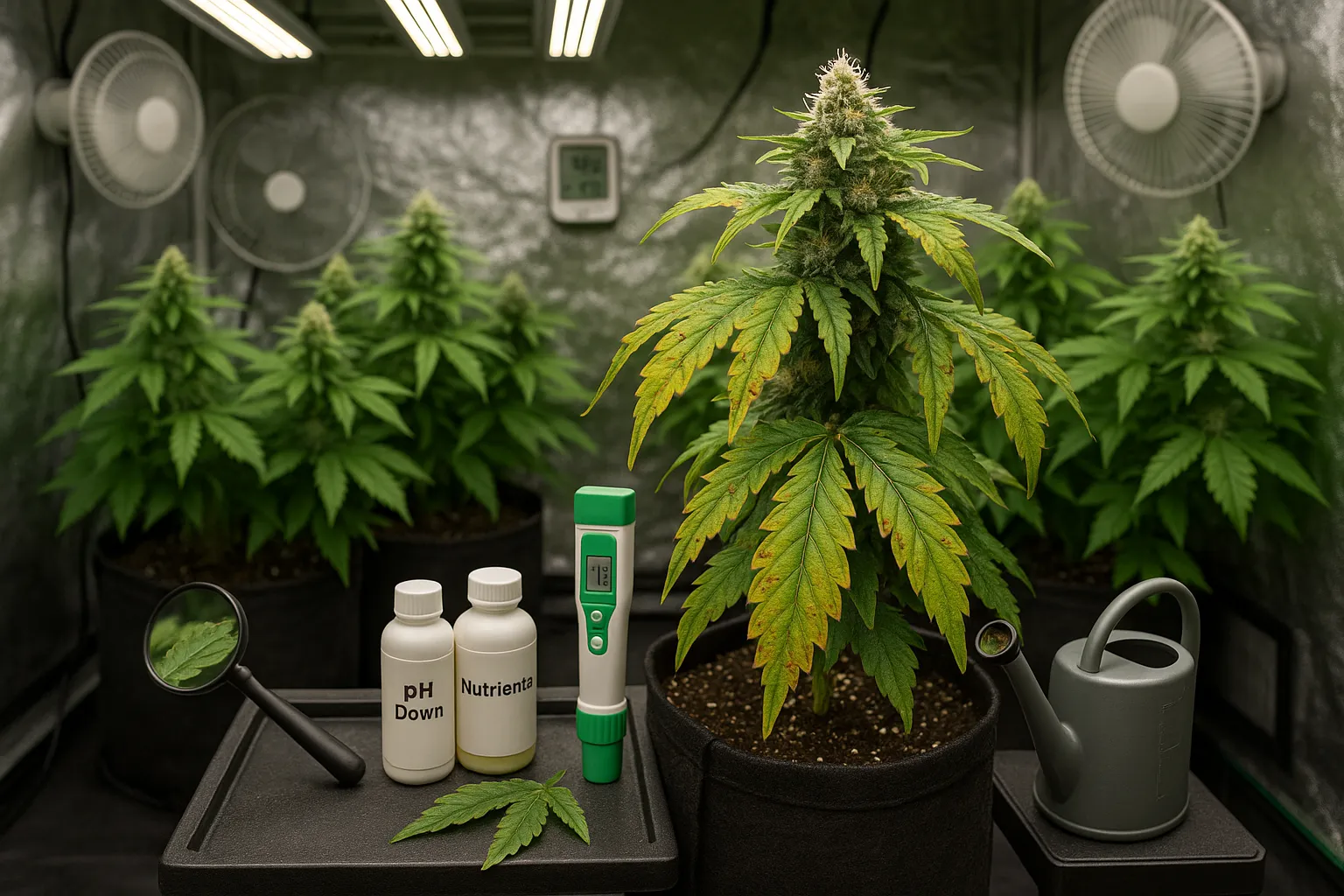
Growing healthy cannabis plants is rewarding, but even experienced cultivators run into common cannabis growing problems. Learning to recognize early warning signs and knowing how to respond will protect your yield, potency, and overall plant health. This guide walks through the most frequent issues, how to diagnose them, and practical steps to fix or prevent them.
Common Cannabis Growing Problems Every Grower Should Know
1. Overwatering and Underwatering
Watering mistakes are among the most widespread issues for indoor and outdoor cannabis grows.
Signs of overwatering:
- Droopy, heavy leaves that curl down like claws
- Slow growth and pale green color
- Consistently wet, compact soil and possible fungus gnats
Signs of underwatering:
- Limp, wilted leaves that feel dry and thin
- Soil pulling away from the sides of the pot
- Plants quickly perking up right after watering
How to fix it:
- Water only when the top 2 to 3 cm of soil are dry.
- Ensure pots have good drainage and use a light, airy medium.
- Adopt a consistent watering schedule based on plant size and environment, not the calendar alone.
2. Nutrient Deficiencies and Toxicities
Improper feeding is another leading cause of cannabis plant problems. Both too few and too many nutrients can damage growth.
Typical deficiencies:
- Nitrogen deficiency: Older leaves turn light green to yellow and drop off.
- Phosphorus deficiency: Dark, dull leaves with purple or red stems and slow growth.
- Potassium deficiency: Leaf edges turn yellow or brown and may curl.
- Calcium or magnesium deficiency: Rust spots, interveinal yellowing, and weak stems.
Nutrient burn (toxicity) signs:
- Leaf tips turn yellow or brown and curl down
- Very dark green foliage
- Crusty salt buildup on soil or container
How to correct nutrient issues:
- Start with a quality cannabis nutrient line and follow the feeding chart at reduced strength.
- Check and adjust pH of water and nutrient solution to avoid nutrient lockout.
- If overfed, flush the medium with pH balanced water, then resume feeding at a lower dose.
3. pH Imbalance and Nutrient Lockout
Even with the right fertilizer, plants cannot absorb nutrients if the pH is off.
Ideal pH ranges:
- Soil: 6.0 to 7.0
- Hydroponics and coco: 5.5 to 6.5
Symptoms of pH problems:
- Multiple deficiency like symptoms at the same time
- Slow growth despite regular feeding
- Runoff readings far outside the ideal range
Solutions:
- Use a calibrated pH meter or reliable test kit for water and runoff.
- Adjust with pH up or pH down products as needed.
- Avoid overusing additives that can swing pH wildly.
4. Heat Stress, Light Burn, and Environmental Issues
Environmental control is crucial for preventing many common cannabis growing problems.
Heat stress signs:
- Leaves taco or canoe upwards along the edges
- Dry, crispy leaf tips and margins
- Slow or stalled growth during hot periods
Light burn signs:
- Bleached or pale spots directly under the light
- Leaves curling up towards the light source
Best practices:
- Maintain temperatures around 22 to 28 C with lights on, slightly cooler when off.
- Keep relative humidity in the recommended range for each growth stage.
- Follow manufacturer guidelines for LED or HID distance from the canopy.
- Use fans for air movement, but avoid blasting plants directly at high speed.
5. Pests and Mold
Insects and fungal diseases can devastate a crop if not caught early.
Common cannabis pests:
- Spider mites: Tiny dots on leaves, fine webbing, stippled yellow spots.
- Aphids and whiteflies: Clusters under leaves, sticky honeydew, distorted growth.
- Fungus gnats: Small flies near soil, larvae feeding on roots in wet media.
Mold and bud rot:
- Gray or white fuzzy growth on buds or leaves
- Brown, mushy spots inside dense flowers
Prevention and control:
- Inspect plants regularly, especially leaf undersides and buds.
- Maintain good air circulation and avoid high humidity in late flowering.
- Quarantine new clones or plants before adding them to your grow room.
- Use biological controls, neem oil, or approved insecticidal soaps when necessary.
Preventing Common Cannabis Growing Problems Long Term
Most issues can be avoided with a solid foundation and consistent habits.
- Choose resilient, beginner friendly strains to reduce stress sensitivity.
- Use clean, sterilized tools and containers to limit pathogens.
- Record feeding schedules, pH, temperature, and humidity to spot patterns.
- Make gradual changes to nutrients, lighting, and environment rather than sudden shifts.
Conclusion
Understanding common cannabis growing problems turns setbacks into learning opportunities. By monitoring water, nutrients, pH, environment, and pests, you can catch early warning signs and respond before serious damage occurs. With a bit of observation and consistent care, your plants will reward you with healthy growth and high quality harvests season after season.