
How Much Hydrogen Peroxide To Germinate Seeds
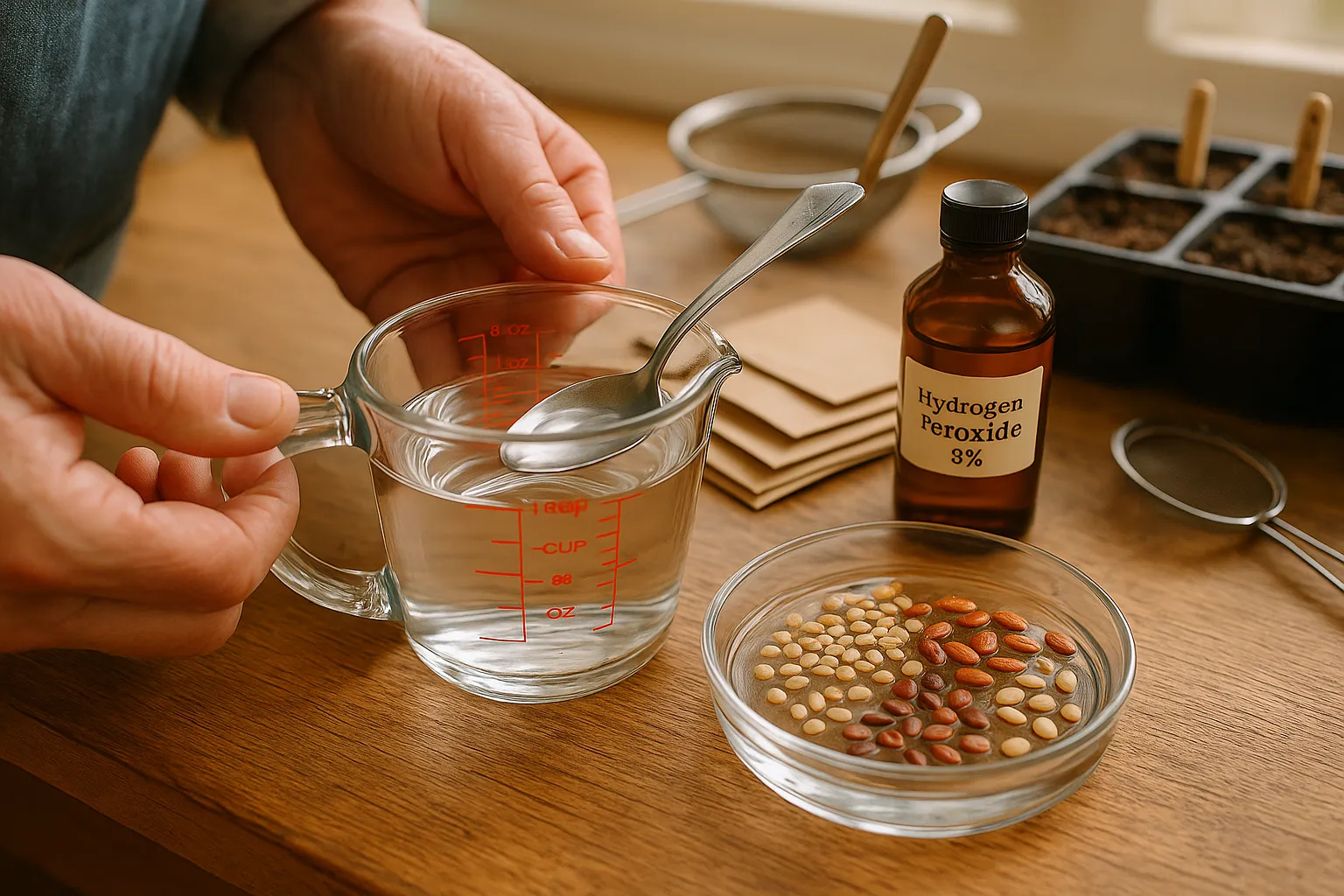
Using hydrogen peroxide for seed germination can speed up sprouting, reduce fungal problems, and improve overall seed health. The key question most gardeners ask is: how much hydrogen peroxide to germinate seeds safely without damaging them? This guide explains the right ratios, methods, and safety tips so you can use it confidently.
Why Use Hydrogen Peroxide For Seed Germination
Hydrogen peroxide (H2O2) is simply water with an extra oxygen molecule. When it breaks down, it becomes water and oxygen, which can be very useful during germination.
- Disinfects seeds: Helps kill fungal spores and some bacteria on the seed coat.
- Boosts oxygen levels: Extra oxygen in the soak water supports faster, stronger sprouting.
- Reduces damping off: Cleaner seeds and tools can lower the risk of seedling diseases.
- Improves success with old seeds: Can slightly improve germination rates in older or slow seeds.
The benefits are real, but concentration matters. Too strong a solution can burn or kill seeds, so correct dilution is essential.
How Much Hydrogen Peroxide To Germinate Seeds Safely
Most home gardeners use common 3 percent hydrogen peroxide from the pharmacy. The following guidelines assume a 3 percent solution.
Standard Soak Solution (Most Vegetable and Flower Seeds)
For a general pre-soak before planting, use:
- 1 teaspoon (about 5 ml) of 3% hydrogen peroxide
- per 1 cup (about 240 ml) of clean water
This creates a mild solution that is strong enough to sanitize but gentle on most seeds.
Soak time: 4 to 6 hours for typical vegetable seeds such as tomatoes, peppers, brassicas, and many flowers. After soaking, rinse the seeds with clean water and sow as usual.
Quick Disinfection Rinse (For Disease-Prone Seeds)
When you are more concerned about seed-borne diseases, you can use a slightly stronger, short exposure:
- 1 tablespoon (about 15 ml) of 3% hydrogen peroxide
- per 1 cup (about 240 ml) of water
Soak time: 10 to 20 minutes only. Stir gently once or twice, then drain, rinse thoroughly with clean water, and plant.
Delicate or Very Small Seeds
Fine seeds such as lettuce, many herbs, and some flowers can be more sensitive. Use a weaker solution:
- 1/2 teaspoon (about 2.5 ml) of 3% hydrogen peroxide
- per 1 cup (about 240 ml) of water
Soak time: 2 to 4 hours, followed by a gentle rinse. Do not exceed the time, as very small seeds can soften too much.
Hard-Coated or Slow-Germinating Seeds
Some seeds with tough coats, such as certain perennials, okra, or some tree seeds, may benefit from a slightly longer soak:
- Use the standard soak solution (1 teaspoon per cup of water).
- Soak time: up to 8 hours, but monitor seeds and avoid over-soaking.
Combine this with other methods like scarification (lightly nicking or sanding the seed coat) if recommended for that species.
How To Use Hydrogen Peroxide Step By Step
1. Prepare Your Solution
Measure water into a clean glass or plastic container. Add the correct amount of 3 percent hydrogen peroxide according to the type of seeds you are treating. Stir gently to mix.
2. Add Seeds
Place seeds into the solution, making sure they are fully submerged. For floating seeds, gently press them down or swirl the container so all surfaces contact the solution.
3. Soak For The Recommended Time
Keep the container at room temperature, away from direct sunlight. Set a timer so you do not exceed the suggested soak period for your seed type.
4. Rinse Thoroughly
After soaking, pour the seeds into a fine strainer and rinse under cool, clean water for at least 30 seconds. This removes any residual peroxide and loosened debris.
5. Sow Immediately
Plant seeds right after rinsing. Place them in pre-moistened seed-starting mix or your chosen medium. Maintain consistent warmth and moisture for best germination.
Additional Ways To Use Hydrogen Peroxide With Seeds
Sanitizing Seed Trays and Tools
A mild hydrogen peroxide solution can help keep your seed-starting area cleaner:
- Mix 1 part 3% hydrogen peroxide to 2 parts water.
- Spray on trays, pots, and tools, let sit for a few minutes, then rinse or let air dry.
Moistening Seed-Starting Mix
Some gardeners like to use a very weak solution to moisten the starting medium:
- 1 teaspoon of 3% hydrogen peroxide per 1 quart (about 1 liter) of water.
This can slightly increase oxygenation and reduce fungal growth, but it should be used sparingly.
Safety Tips And Common Mistakes
- Do not use strong concentrations: Avoid 6 percent or higher unless you are experienced and follow specific protocols.
- Do not exceed soak times: Longer is not better; over-soaking can damage seed embryos.
- Store properly: Keep hydrogen peroxide in its original dark bottle, tightly closed, away from heat and light.
- Protect skin and eyes: While 3 percent is mild, it can still irritate; wash off spills and avoid contact with eyes.
- Test on a small batch: If you are unsure how a particular seed type will react, treat a few seeds first.
Conclusion
Knowing exactly how much hydrogen peroxide to germinate seeds can give you a real advantage in starting healthy plants. For most seeds, 1 teaspoon of 3 percent hydrogen peroxide per cup of water, used as a short soak, is safe and effective. Adjust the strength and duration for delicate or hard-coated seeds, always rinse after soaking, and sow promptly. With these simple guidelines, you can harness hydrogen peroxide as a useful, low-cost tool in your seed-starting routine.