
How to Grow Weed in a Grow Tent
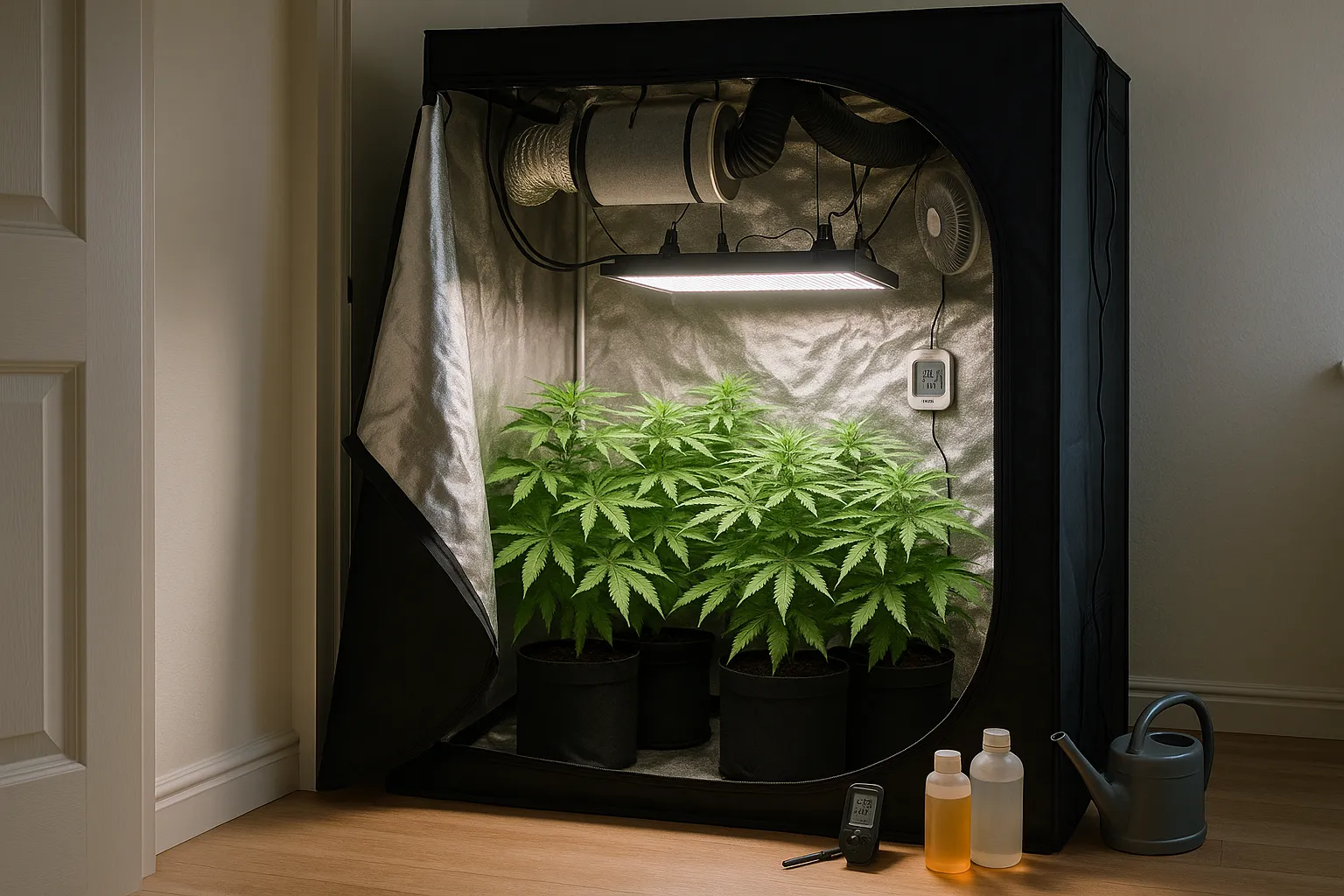
Learning how to grow weed in a grow tent is one of the most efficient ways to produce high-quality cannabis at home. A grow tent gives you control over light, temperature, humidity, and airflow, helping you achieve consistent yields in a relatively small space. This guide walks you through the essentials, from choosing the right tent to harvesting your buds.
Why Use a Grow Tent for Indoor Cannabis?
A grow tent is a portable, enclosed environment lined with reflective material and designed for indoor gardening. For cannabis cultivation, it offers several advantages:
- Control: Manage light cycles, temperature, and humidity for each growth stage.
- Discretion: Contain light leaks, smells, and noise from fans and filters.
- Efficiency: Reflective walls maximize light use, improving growth and yield.
- Cleanliness: Helps keep dust, pests, and contaminants away from your plants.
Choosing the Right Grow Tent and Equipment
Pick the Right Tent Size
Start by matching tent size to your space and goals. Common options include:
- 2x2 ft (60x60 cm): Ideal for 1 small plant or a micro grow.
- 2x4 ft (60x120 cm): Good for 2 to 4 plants, depending on training.
- 3x3 or 4x4 ft: Popular for home growers; supports 4 to 6 medium plants.
Consider tent height too. A minimum of 5 to 6 feet allows room for lights, filters, and plant stretch during flowering.
Lighting for Indoor Cannabis
Lighting is the engine of your grow. Main options include:
- LED grow lights: Energy-efficient, lower heat, full spectrum, ideal for small tents.
- HID (HPS/MH): High output but hotter and less efficient; require strong ventilation.
For LEDs, aim for quality fixtures designed for cannabis, and follow manufacturer coverage guidelines. As a rough guide, a good LED panel of 200 to 300 watts (true draw) can cover a 2x2 to 2x3 ft area.
Ventilation and Odor Control
Healthy cannabis plants need fresh air and stable conditions. Your basic setup should include:
- Inline exhaust fan: Pulls hot, humid air out of the tent.
- Carbon filter: Attached to the fan to remove cannabis odor.
- Passive or active intake: Fresh air enters through vents or a small intake fan.
- Oscillating fan: Circulates air around plants to prevent mold and strengthen stems.
Growing Medium and Containers
For most beginners, high-quality soil or soilless mix is the easiest way to grow weed in a grow tent:
- Soil: Choose a light, well-draining potting soil formulated for cannabis or vegetables.
- Coco coir: A soilless medium that offers fast growth but requires more frequent feeding.
Use fabric pots or air pots for better root oxygenation. Sizes of 3 to 5 gallons work well for most indoor plants.
How to Grow Weed in a Grow Tent: Step-by-Step
1. Germinate and Plant
Germinate seeds using a paper towel method or directly in starter plugs. Once taproots appear, place seedlings into small pots with moist, but not soaked, medium. Provide gentle light and avoid strong airflow directly on young plants.
2. Vegetative Stage
When seedlings have a few sets of true leaves, transplant into final containers and switch to a vegetative light schedule:
- Light cycle: 18 hours on / 6 hours off (or up to 20/4).
- Temperature: 22 to 27 C (72 to 80 F) with lights on.
- Humidity: Around 50 to 70 percent for young plants.
Feed with a balanced vegetative nutrient formula, starting at half strength and adjusting based on plant response. Avoid overwatering; let the top inch of medium dry before watering again.
3. Training and Canopy Management
Space is limited in a grow tent, so training helps maximize yield:
- Topping: Cut the main tip to create multiple colas and a flatter canopy.
- LST (low stress training): Gently bend and tie branches to spread the plant horizontally.
- SCROG (screen of green): Use a net to guide branches and create an even canopy under your light.
4. Flowering Stage
Switch photoperiod plants to flowering by changing the light cycle to 12 hours on / 12 hours off. Ensure the tent is completely light-tight during the dark period.
- Temperature: 20 to 26 C (68 to 79 F).
- Humidity: Lower to 40 to 50 percent to reduce mold risk.
- Nutrients: Transition to a bloom formula higher in phosphorus and potassium.
Monitor plants for signs of deficiencies, nutrient burn, or pests. Remove yellowing lower leaves and lightly defoliate dense areas to improve airflow and light penetration.
5. Harvest, Drying, and Curing
Harvest when most trichomes are cloudy with some amber, using a magnifier to inspect buds. Cut branches, trim fan leaves, and hang them in a dark space with gentle airflow, around 18 to 21 C and 50 to 60 percent humidity.
After 7 to 14 days, when small stems snap instead of bend, place buds in airtight jars. Open jars daily for the first week to release moisture, then less often. A proper cure of 2 to 4 weeks greatly improves flavor and smoothness.
Conclusion
Understanding how to grow weed in a grow tent allows you to create a controlled, efficient indoor garden that can produce excellent cannabis year-round. By choosing the right equipment, managing your environment, and following each growth stage carefully, you can achieve healthy plants and impressive yields even in a small space.