
Indoor vs Outdoor Cannabis cultivation
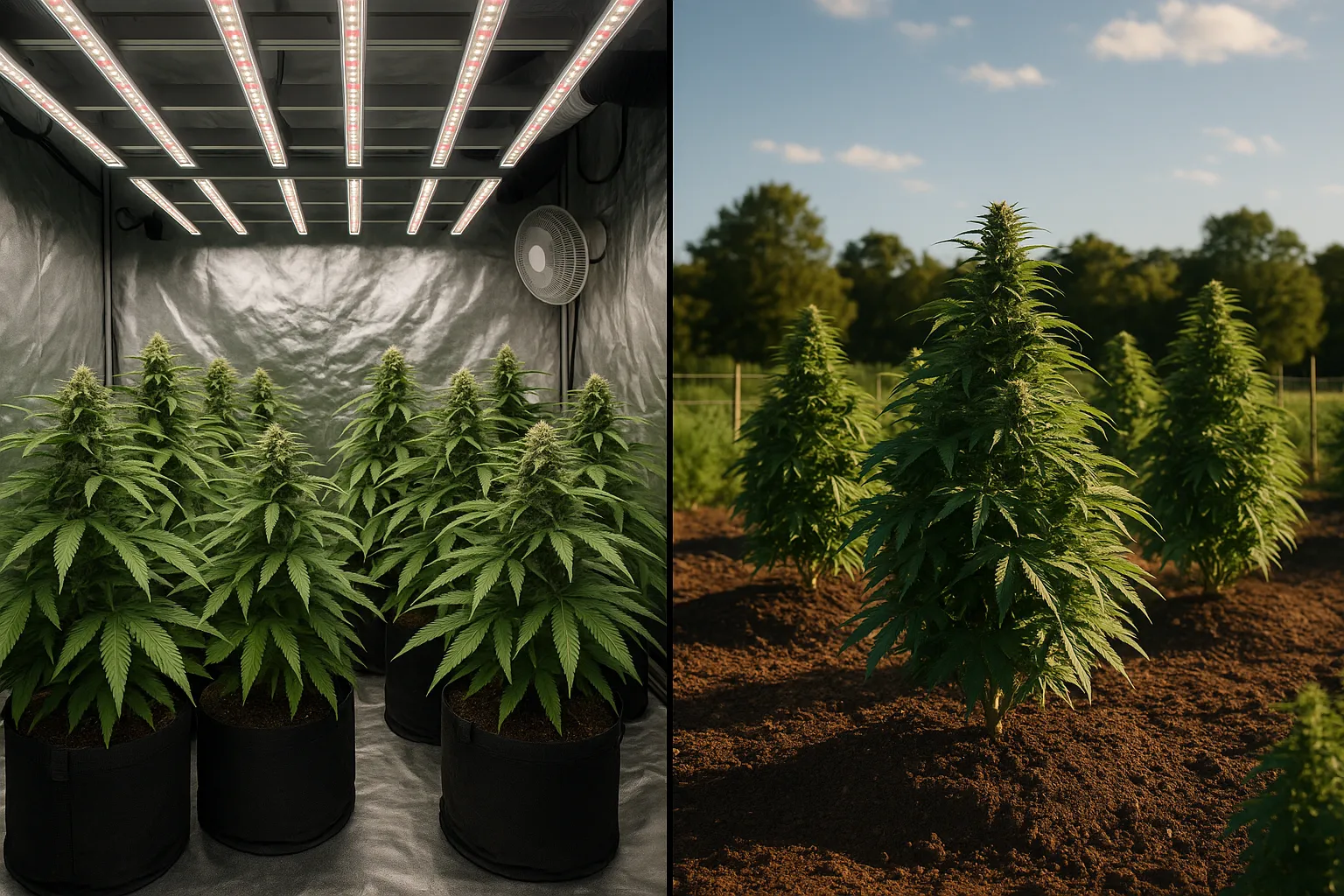
Choosing between indoor vs outdoor cannabis cultivation is one of the most important decisions a grower can make. Each method shapes your plants flavor, potency, yield, and overall cost. Understanding the real trade offs will help you match your growing style to your budget, climate, and goals.
Indoor vs Outdoor Cannabis Cultivation: Key Differences
At the core, the choice is about control versus natural efficiency. Indoor growing lets you fine tune every variable, while outdoor cultivation harnesses sunlight and the natural environment.
Environment and Climate Control
Indoor cultivation gives you a fully controlled environment:
- Precise control of temperature and humidity
- Adjustable light cycles for vegetative and flowering stages
- Protection from wind, rain, pests, and extreme weather
This high level of control supports consistent quality and allows year round harvests, even in harsh climates.
Outdoor cultivation relies on the local climate and seasons:
- Plants follow the natural daylight cycle
- Growth and harvest windows depend on your latitude and weather
- Heavy rain, heat waves, or early frosts can impact yield and quality
In regions with long, sunny summers and mild autumns, outdoor cannabis can thrive with minimal intervention.
Lighting and Energy Use
Indoor grows depend on artificial lighting: LED, HPS, or CMH fixtures. While these lights deliver strong, targeted intensity, they also consume a lot of electricity and generate heat that must be managed with ventilation or air conditioning.
Outdoor grows use free, full spectrum sunlight. This drastically reduces operating costs and environmental impact. However, shorter or cloudy seasons can limit plant development and final potency in some regions.
Quality, Yield, and Terpenes
Both indoor and outdoor cannabis can be high quality when grown well, but they often develop different characteristics.
Potency and Bag Appeal
Indoor cannabis is often associated with:
- Higher cannabinoid levels, especially THC, thanks to optimized lighting
- Dense, compact buds with strong visual appeal
- Very clean flowers when combined with good filtration and hygiene
Outdoor cannabis can certainly reach high potency, but its visual appearance may be less uniform. Buds may be larger yet slightly looser, with occasional cosmetic imperfections from wind or weather. Many connoisseurs, however, value the natural look and robust effects of well grown outdoor flower.
Terpene Profile and Flavor
Terpenes drive aroma and flavor. Here the difference is more nuanced:
- Indoor: Controlled stress, stable temperatures, and dialed in nutrients can maximize terpene expression and produce very consistent flavor.
- Outdoor: Natural UV light, day night temperature swings, and living soil can create complex, earthy, and sometimes more layered terpene profiles.
Many growers find that outdoor plants grown in rich organic soil develop a distinctive character that is hard to replicate indoors.
Cost, Scale, and Practical Considerations
Startup and Operating Costs
Indoor cannabis cultivation generally requires higher upfront investment:
- Grow tent or dedicated room construction
- Grow lights, timers, fans, filters, and possibly air conditioning
- Electrical upgrades and ongoing power costs
Operating costs remain significant due to electricity, replacement bulbs or fixtures, filters, and climate control.
Outdoor cultivation typically costs less to start and run:
- Basic tools, soil amendments, and irrigation supplies
- Fencing or simple structures for security and support
- Minimal energy costs, mainly for water pumps or small equipment
This makes outdoor growing attractive for budget conscious cultivators and for scaling up to larger plant counts.
Yields and Harvest Frequency
Indoor grows can achieve multiple harvests per year by cycling plants through vegetative and flowering rooms. While each individual plant may be smaller, total annual yield per square meter can be very high.
Outdoor grows usually produce one main harvest per year, but each plant can become very large under open sky, producing substantial yields. In warm climates, light deprivation techniques or auto flowering genetics can extend the season and allow more than one outdoor harvest.
Pests, Disease, and Biosecurity
Indoor environments reduce exposure to some pests, but once an issue like spider mites or powdery mildew appears, it can spread rapidly in the closed space. Good hygiene, filtration, and quarantine practices are essential.
Outdoor plants face insects, molds, and wildlife. Companion planting, beneficial insects, proper spacing, and pruning for airflow are key organic strategies. While risk is higher, a diverse outdoor ecosystem can also support natural pest control.
How to Choose: Indoor vs Outdoor Cannabis Cultivation
Consider these factors when deciding which method fits you best:
- Climate: Harsh winters or very short summers favor indoor; mild, sunny climates favor outdoor.
- Budget: Limited funds point to outdoor or small, efficient indoor setups with LEDs.
- Space and privacy: Indoor grows are easier to conceal; outdoor plants may require secure, discreet locations.
- Goals: If you value absolute consistency and year round production, indoor is ideal. If you want large plants, lower costs, and a natural growing experience, outdoor is compelling.
Conclusion
Indoor vs outdoor cannabis cultivation is not about which method is universally superior, but which aligns with your environment, resources, and expectations. Indoor growing offers precision, repeatability, and top shelf visual quality, while outdoor cultivation delivers low cost, large plants, and a deep connection to natural cycles. Many successful growers even combine both, using indoor spaces for starts and breeding, and outdoor gardens for full season production. By understanding the strengths and limits of each approach, you can design a cultivation strategy that consistently produces healthy, aromatic, and potent cannabis.