
Planting Cannabis Seeds Directly In Soil
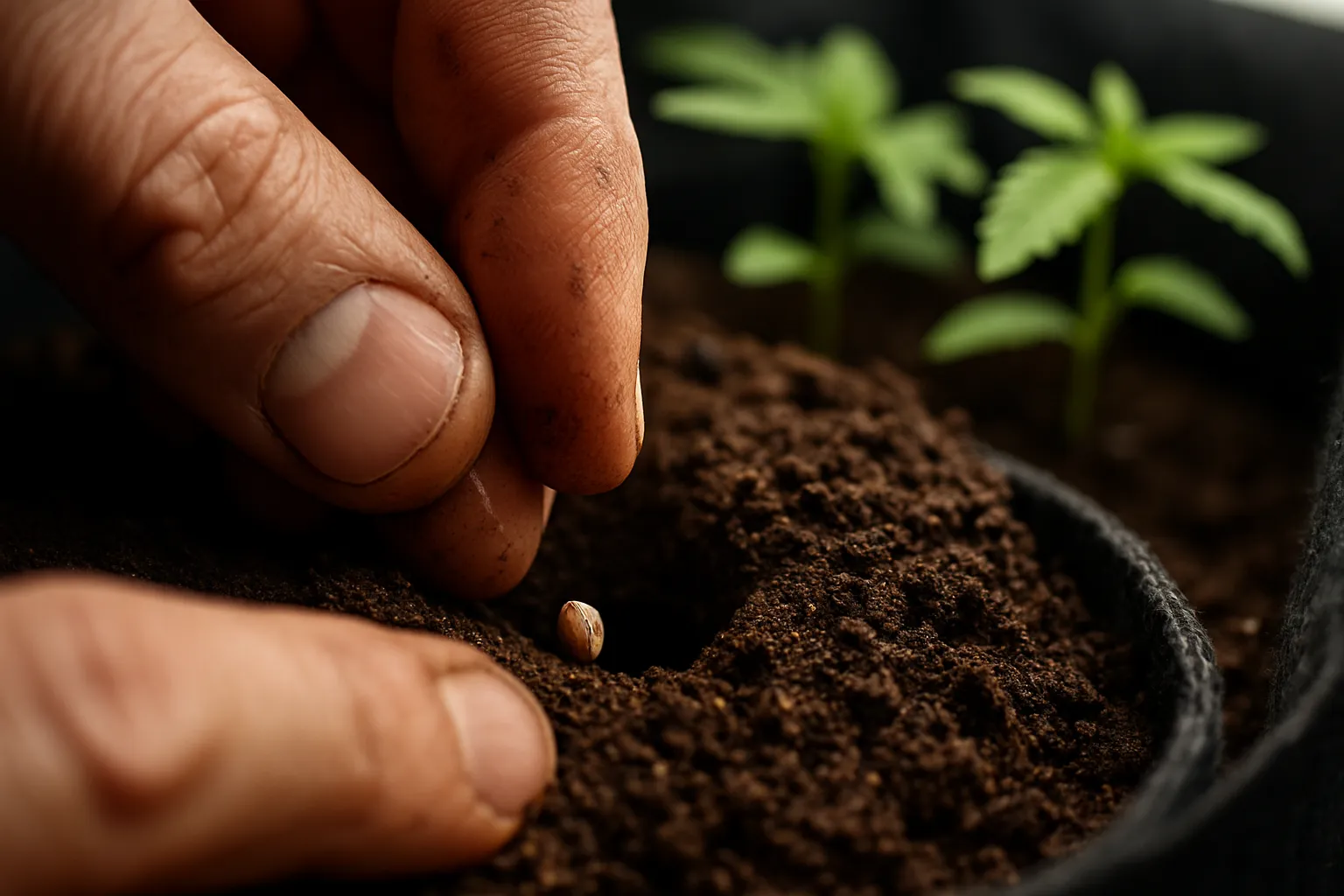
Planting cannabis seeds directly in soil is one of the simplest and most natural ways to start your grow. Instead of juggling paper towels, plugs, or rockwool, you let the seed germinate where it will live. This reduces transplant stress and keeps handling to a minimum, which is ideal for fragile seedlings.
Below you will find a clear, step by step guide covering soil choice, container size, planting depth, watering, light, temperature, and early care so your young plants have the best possible start.
Why Plant Cannabis Seeds Directly In Soil
There are several advantages to sowing seeds straight into their final or intermediate pots.
- Less transplant shock: Seedlings never have to be moved, helping them establish a strong root system without interruption.
- Lower contamination risk: Fewer handling steps mean fewer chances for damage, mold, or pathogens.
- Simple process: No extra equipment such as paper towels, propagation cubes, or domes is strictly required.
- More natural development: Roots grow outward and downward from the start, adjusting to the soil environment immediately.
Choosing the Right Soil for Planting Cannabis Seeds Directly In Soil
The soil you use is critical. Young cannabis seedlings are sensitive and can be burned by strong nutrients or poor drainage.
Soil characteristics to look for
- Light and airy texture: A loose mix allows oxygen to reach roots and prevents compaction. Look for perlite, coco, or similar aeration components.
- Good drainage: Water should flow through easily, leaving the soil moist but not waterlogged.
- Mild nutrient levels: Avoid heavily pre fertilized or "hot" soils. Seedlings only need gentle nutrition at first.
- Balanced pH: Aim for a pH of roughly 6.0 to 7.0 for soil grows.
Many growers use a light seed starting mix for the top layer where the seed sits, and a richer potting soil deeper in the container so roots grow into more nutrients as the plant matures.
Container Size and Preparation
You can sow directly into the final pot or into a smaller starter container. Each option has pros and cons.
Directly into final pots
- Pros: No transplanting, minimal root disturbance, less stress.
- Cons: Large pots can stay wet for longer, increasing the risk of overwatering seedlings.
Into small starter pots
- Pros: Easier moisture control, faster dry cycles, compact space for early growth.
- Cons: You must transplant later, which requires careful handling.
Whatever container you choose, make sure it has multiple drainage holes. Fill it with your soil mix and gently tamp to remove large air pockets without compressing it too firmly.
How to Plant Cannabis Seeds Directly In Soil
Once your soil and containers are ready, follow these steps to sow your seeds.
1. Pre moisten the soil
Before planting, lightly water the soil until it is evenly moist but not soaked. You want it damp all the way through, with no standing water at the bottom of the tray or saucer.
2. Make the planting hole
Using a clean fingertip, pencil, or similar tool, create a small hole about 1 to 1.5 centimeters deep. Planting too deep can slow or prevent emergence; too shallow can dry out the seed.
3. Place the seed
Place one seed in each hole. Many growers place the seed with the pointed end slightly downward, as that is usually where the taproot emerges, but orientation is not critical; the seedling will orient itself.
4. Cover gently
Lightly cover the seed with loose soil and do not compress it. The seed should be surrounded by moist, airy soil that allows the sprout to push through easily.
5. Maintain moisture
Mist or lightly water the top layer so it is moist. During germination, keep the top centimeter of soil from drying out, but avoid soaking the pot. A gentle spray bottle works well.
Ideal Conditions for Germination and Early Growth
Healthy germination depends on stable environmental conditions.
- Temperature: Aim for 21 to 26 degrees Celsius. Cooler temperatures slow germination; hotter conditions can damage seeds.
- Humidity: Moderate to high humidity, around 60 to 70 percent, helps prevent the seed zone from drying out.
- Light: Seeds do not need intense light to sprout, but once they break the soil surface, provide gentle, consistent light to prevent stretching.
Many growers use LED or fluorescent grow lights, keeping them at an appropriate distance so seedlings do not burn or stretch excessively.
Watering and Caring for Seedlings
Overwatering is one of the most common mistakes when planting cannabis seeds directly in soil.
- Water sparingly: Allow the top layer of soil to start drying slightly between waterings. The pot should feel lighter before you water again.
- Use small amounts: Seedlings have tiny root systems. Light, frequent watering around the seedling is better than drenching the entire pot.
- Avoid nutrients at first: If you used a mild soil, seedlings should not need added fertilizer for the first one to two weeks.
Watch for strong, upright growth and healthy green leaves. Pale or twisted leaves, or very slow development, can signal issues with watering, soil, or temperature.
Common Mistakes to Avoid
- Planting too deep: Seeds buried too far may never emerge.
- Using hot soil: Highly fertilized mixes can burn seedlings.
- Overwatering: Constantly wet soil reduces oxygen to roots and can cause damping off.
- Strong light too early: High intensity light close to the soil surface can dry out or stress new sprouts.
Conclusion
Planting cannabis seeds directly in soil is a straightforward, low stress method that lets your plants germinate and establish roots where they will grow. By choosing a light, well drained soil, planting at the right depth, maintaining gentle moisture, and providing stable temperature and light, you give each seed the best chance to become a vigorous, healthy plant.